What is PPC in Digital Marketing? A Simple Guide for Beginners
If you’ve ever searched for something on Google and clicked on one of the first results marked as “Ad”, you’ve already interacted with PPC (Pay-Per-Click) advertising.
But what exactly is PPC in digital marketing, and why are so many businesses investing heavily in it?
Let’s break it down in the simplest way possible.
What is PPC in Digital Marketing?
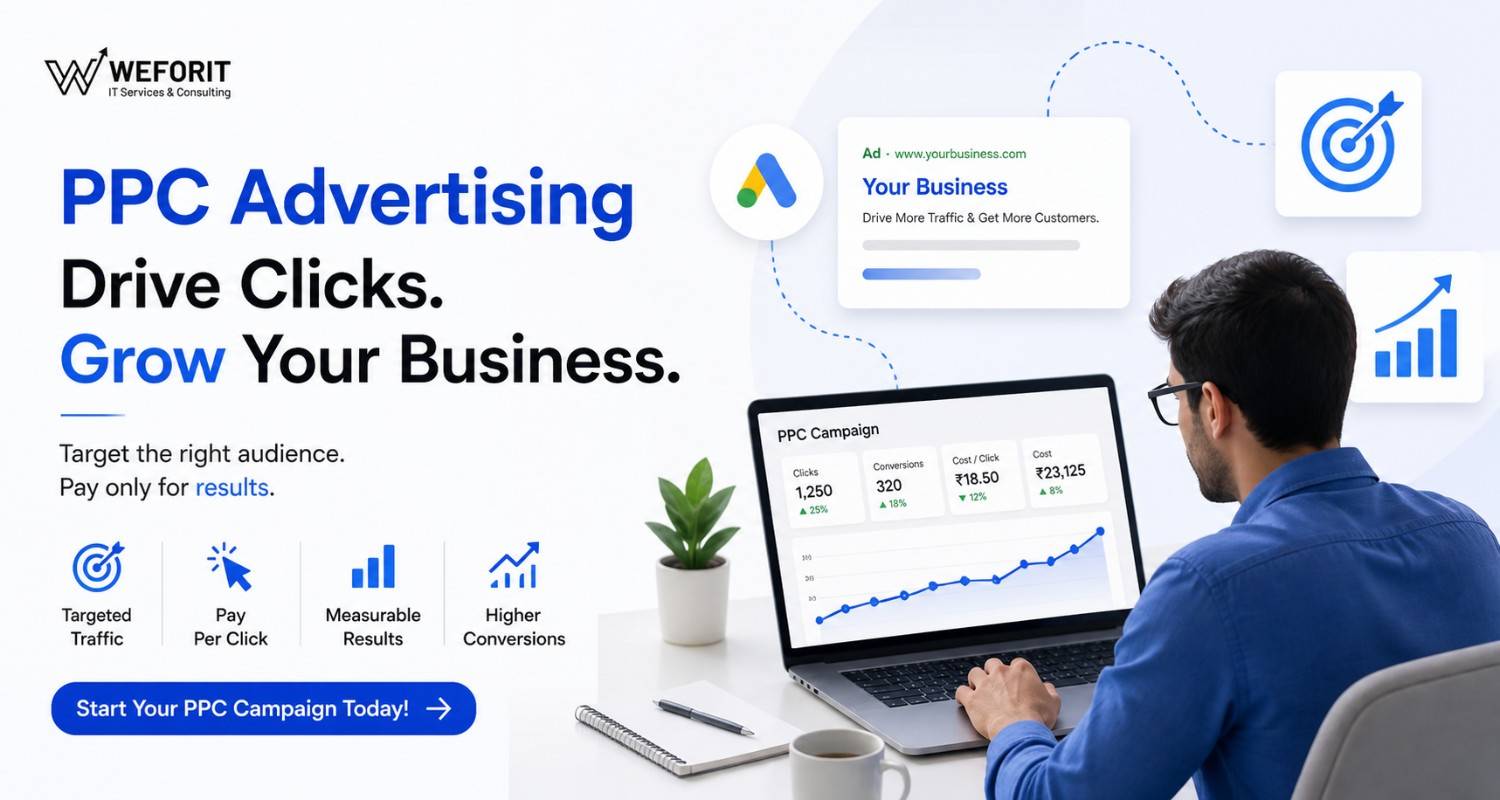
PPC (Pay-Per-Click) is a type of digital marketing where advertisers pay a fee each time someone clicks on their ad.
Instead of earning traffic organically (like SEO), you’re essentially buying visits to your website.
In short:
You pay only when someone clicks on your ad.
These ads usually appear on:
- Search engines (like Google)
- Social media platforms
- Websites and apps
How Does PPC Work?
Let’s simplify this.
Step-by-step process:
- You choose keywords (e.g., “digital marketing services”)
- You create an ad
- You set a budget and bid amount
- Your ad enters an auction
- If you win, your ad shows on top
- You pay only when someone clicks
This system is called an ad auction.
Why is PPC Important in Digital Marketing?
You might wonder:
Why should businesses use PPC?
Here’s the straightforward answer:
1. Instant Traffic
Unlike SEO, which takes time, PPC can bring traffic immediately after launching a campaign.
2. Highly Targeted
You can target:
- Location (like India, Gurgaon, etc.)
- Age, gender, interests
- Device type
3. Measurable Results
You can track:
- Clicks
- Conversions
- ROI
4. Budget Control
You decide:
- Daily budget
- Maximum cost per click
What Are the Different Types of PPC Ads?
PPC isn’t just Google search ads. There are multiple formats:
1. Search Ads
Text ads that appear on search engine results pages.
2. Display Ads
Visual banner ads shown on websites.
3. Social Media Ads
Ads on platforms like Facebook, Instagram, and LinkedIn.
4. Remarketing Ads
Target users who have already visited your website.
5. Shopping Ads
Product-based ads (mainly for eCommerce).
What is CPC, CTR, and Quality Score in PPC?
To understand PPC properly, you need to know a few key terms:
What is CPC (Cost Per Click)?
The amount you pay for each click on your ad.
What is CTR (Click-Through Rate)?
The percentage of people who click your ad after seeing it.
Formula:
Clicks ÷ Impressions × 100
What is Quality Score?
A rating given by Google based on:
- Ad relevance
- Keyword relevance
- Landing page experience
Higher quality score = lower cost + better ranking
PPC vs SEO: What’s the Difference?
This is one of the most common questions beginners ask.
| Factor | PPC | SEO |
|---|---|---|
| Speed | Instant | Takes time |
| Cost | Paid | Free traffic |
| Sustainability | Stops when the budget ends | Long-term |
| Control | High | Limited |
Best strategy? Use both together.
Is PPC Worth It for Small Businesses?
Short answer: Yes, if done correctly.
Why?
- You can start with a small budget
- You target only relevant audiences
- You get faster results than organic methods
Even ₹500–₹1000/day campaigns can generate leads if optimized well.
What Are the Benefits of PPC Advertising?
Let’s quickly summarize:
- Fast results
- High targeting precision
- Full control over budget
- Easy to measure performance
- Scalable campaigns
What Are Common PPC Mistakes Beginners Make?
Understanding mistakes is just as important.
1. Targeting Wrong Keywords
Broad keywords = wasted budget
2. Ignoring Landing Page Experience
Even great ads fail if the landing page is poor.
3. Not Tracking Conversions
If you don’t track results, you can’t optimize.
4. No A/B Testing
Testing different ads improves performance significantly.
How to Start PPC as a Beginner?
If you’re just starting, follow this:
Step 1: Choose a Platform
Start with Google Ads (most beginner-friendly)
Step 2: Do Keyword Research
Focus on intent-based keywords
Step 3: Create Simple Ads
Clear headline + strong CTA
Step 4: Set Budget
Start small and scale gradually
Step 5: Track Performance
Use analytics to improve results
How Much Does PPC Cost in India?
There’s no fixed cost—it depends on your industry and competition.
But generally:
- Low competition: ₹5–₹20 per click
- Medium competition: ₹20–₹100 per click
- High competition: ₹100+ per click
The key is not cost, but return on investment (ROI).
How Can You Improve PPC Performance?
Here are practical tips:
- Use long-tail keywords
- Improve ad copy
- Optimize landing pages
- Use negative keywords
- Monitor campaigns regularly
Final Thoughts
PPC is one of the fastest and most effective ways to grow online.
If you want:
- Immediate traffic
- Qualified leads
- Measurable results
PPC is the way to go.
However, success in PPC doesn’t come from just running ads—it comes from strategy, testing, and continuous optimization.
Frequently Asked Questions
What is PPC in digital marketing?
How does PPC work step by step?
1. Advertisers choose keywords
2. Create ads and set bids
3. Ads enter an auction
4. The best ads appear on top
5. Advertisers pay only when users click
The ad position depends on bid amount and quality score.
Why is PPC important for businesses?
- Instant visibility on search engines
- Highly targeted audience reach
- Measurable performance metrics
- Faster lead generation compared to SEO
It helps businesses grow quickly and efficiently.
What is the difference between PPC and SEO?
Is PPC suitable for small businesses?
- It allows low-budget entry
- Targets specific audiences
- Generates quick leads
With proper optimization, even small campaigns can be profitable.
Written by: