SEO or Google Ads: Where Should Businesses Invest First?
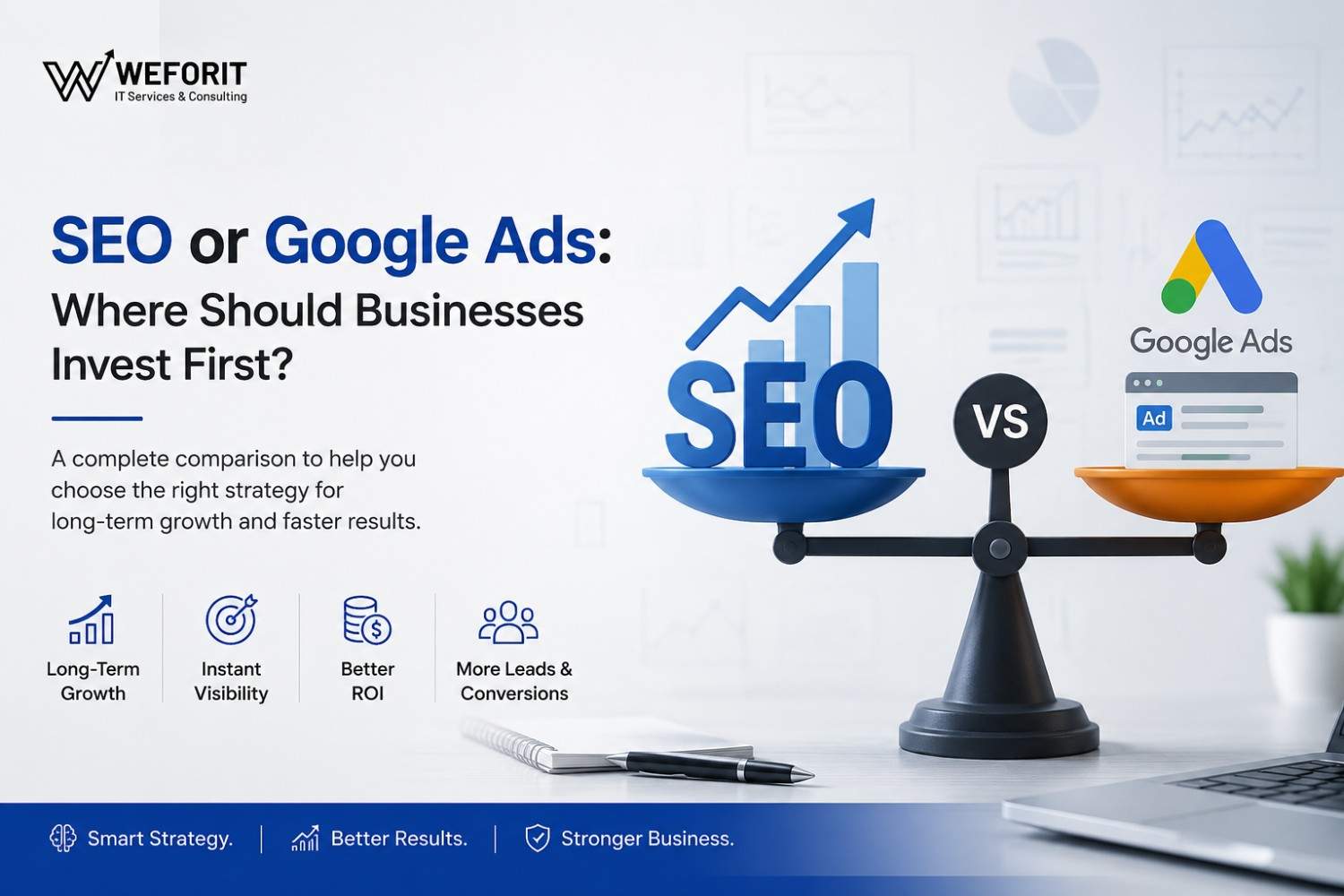
In today’s competitive digital landscape, businesses often face one common question: Should we invest in SEO or Google Ads first?
Both strategies help brands increase visibility, generate leads, and drive sales, but they work very differently. While SEO focuses on long-term organic growth, Google Ads delivers immediate traffic through paid campaigns. The real challenge is understanding which strategy aligns better with your business goals, budget, and growth stage.
If you are a startup looking for instant leads or an established company planning sustainable growth, understanding the difference between SEO vs Google Ads can help you make smarter marketing decisions.
What is SEO and Why Do Businesses Invest in It?
Search Engine Optimization (SEO) is the process of improving a website’s visibility on search engines like Google organically. Businesses invest in SEO to rank higher for relevant keywords, attract targeted traffic, and build long-term authority online.
Unlike paid advertising, SEO does not charge businesses for every click. Instead, it focuses on improving website content, technical performance, backlinks, and user experience.
A strong SEO strategy can help businesses:
- Generate consistent organic traffic
- Build trust and credibility
- Improve brand visibility
- Reduce long-term customer acquisition costs
- Increase website engagement
For example, if a business ranks on the first page for keywords related to its services, it can continuously receive traffic without paying for every visitor.
SEO also works closely with other digital strategies like digital marketing, SMO, and ORM to strengthen a brand’s online presence across multiple platforms.
SEO vs PPC: Understanding How Google Ads Works
Google Ads, also known as PPC (Pay-Per-Click) advertising, allows businesses to appear instantly at the top of search results by paying for clicks.
Unlike SEO, Google Ads can generate traffic within hours of launching a campaign. Businesses choose Google Ads when they need:
- Immediate leads
- Fast visibility
- Seasonal campaign promotion
- Product launches
- Retargeting opportunities
For example:
A real estate company running Google Ads for “Luxury Apartments in Gurgaon” can start receiving inquiries the same day.
However, there is one major difference between SEO vs PPC:
- SEO traffic continues over time
- PPC traffic stops when ad spend stops
This makes Google Ads excellent for short-term growth but potentially expensive in highly competitive industries.
Organic Traffic vs Paid Traffic: Which Performs Better?
One of the biggest debates in organic traffic vs paid traffic is sustainability.
Organic Traffic (SEO)
Organic traffic usually performs better in the long run because users trust organic search results more than advertisements. Visitors coming from SEO are often researching solutions actively, which improves engagement quality.
Benefits of organic traffic:
- Higher trust factor
- Better long-term ROI
- Sustainable visibility
- Lower cost over time
Paid Traffic (Google Ads)
Paid traffic is effective for businesses that need quick conversions. It provides instant visibility for competitive keywords that may take months to rank organically.
Benefits of paid traffic:
- Instant traffic
- Quick lead generation
- Better targeting controls
- Ideal for promotions and campaigns
The best-performing businesses usually combine both instead of relying on only one strategy.
SEO vs Google Ads: Cost Comparison
Budget plays a major role when choosing between SEO and Google Ads.
SEO Costs
SEO requires investment in:
- Content creation
- Technical optimization
- Link building
- Website improvements
- Keyword research
Although SEO takes time, the long-term return is often more cost-effective because traffic continues without paying per click.
Google Ads Costs
Google Ads works on bidding. Businesses pay every time someone clicks their advertisement.
In competitive industries:
- Legal keywords can cost ₹500–₹2000 per click
- Finance and insurance keywords can become even more expensive
If campaigns are not optimized properly, businesses can spend heavily without generating profitable results.
That is why many companies first improve their website development and landing pages before scaling paid campaigns.
SEO or Paid Advertising: Which Gives Faster Results?
If speed is the priority, Google Ads wins.
A properly optimized PPC campaign can start generating leads within hours. This makes it ideal for:
- New businesses
- Product launches
- Event promotions
- Limited-time offers
However, SEO builds momentum gradually. Most businesses start seeing meaningful SEO growth within 3–6 months depending on competition and strategy quality.
So the comparison becomes:
- SEO = Long-term growth
- Paid Ads = Immediate visibility
Businesses looking for sustainable authority usually invest in SEO first while using ads strategically for quick wins.
SEO vs SEM: Which Strategy Builds Better ROI?
SEM (Search Engine Marketing) includes both SEO and paid advertising.
When comparing SEO vs SEM, businesses should focus on return on investment rather than just traffic numbers.
SEO ROI
SEO generally delivers:
- Lower acquisition costs over time
- Compounding traffic growth
- Better long-term brand authority
Paid Ads ROI
Google Ads can deliver excellent ROI when:
- Campaign targeting is accurate
- Landing pages are optimized
- Conversion tracking is implemented properly
However, ad performance depends heavily on continuous spending.
The strongest brands usually combine:
- SEO for long-term authority
- Google Ads for lead acceleration
- ORM for reputation management
- SMO for audience engagement
This integrated approach strengthens overall digital visibility.
When Should Businesses Invest in SEO First?
Businesses should prioritize SEO first when they:
- Want long-term growth
- Have limited ad budgets
- Need sustainable organic traffic
- Want to build brand authority
- Are focused on content-driven marketing
SEO is especially valuable for businesses in industries where customers research extensively before purchasing.
When Should Businesses Invest in Google Ads First?
Google Ads is the better first investment when businesses:
- Need leads immediately
- Are launching a new service
- Want fast testing for keywords
- Operate in highly competitive industries
- Need location-based targeting
Paid campaigns also help businesses collect valuable data that can later improve SEO strategies.
Why Combining SEO and Google Ads Works Best
The smartest businesses do not treat SEO and Google Ads as competitors. Instead, they use both strategically.
Here’s why combining both works effectively:
- SEO builds long-term organic authority
- Google Ads generates immediate visibility
- PPC data helps improve SEO keyword targeting
- SEO content improves ad landing page quality
- Combined visibility increases brand trust
For example:
A business ranking organically and appearing in paid ads simultaneously often receives higher click-through rates because users see the brand multiple times.
Final Verdict: SEO or Google Ads?
There is no universal answer to the SEO or Google Ads debate because every business has different goals.
Choose SEO if:
- You want sustainable growth
- You are building long-term authority
- You want better long-term ROI
Choose Google Ads if:
- You need fast results
- You want immediate traffic
- You are running short-term campaigns
But in reality, the best digital marketing strategy combines both.
SEO creates a strong foundation, while Google Ads helps businesses scale faster. When integrated with services like digital marketing, website development, SMO, and ORM, businesses can build a powerful online presence that delivers both immediate and long-term results.
Frequently Asked Questions
What is the main difference between SEO and Google Ads?
SEO usually takes time because it depends on content quality, website authority, backlinks, and technical optimization. However, once rankings improve, businesses can receive consistent traffic without paying for every visitor.
Google Ads, on the other hand, delivers immediate visibility and traffic. Businesses can start generating leads within hours of launching a campaign, but traffic stops once the advertising budget is paused.
In simple terms:
SEO = Long-term organic growth
Google Ads = Fast paid visibility
Which is better for small businesses: SEO or Google Ads?
SEO is often better for small businesses that want:
Long-term online visibility
Sustainable traffic growth
Lower long-term marketing costs
Better brand trust
Google Ads is better when businesses need:
Immediate leads
Quick sales
Local targeting
Fast campaign results
Many successful small businesses start with a combination of both. They use Google Ads for immediate inquiries while building SEO gradually for long-term growth.
How long does SEO take compared to Google Ads?
SEO, however, is a long-term strategy. Most websites begin seeing measurable improvements within 3 to 6 months, while highly competitive industries may take even longer.
The timeline for SEO depends on factors like:
Website age
Competition level
Content quality
Technical SEO
Backlink profile
Although SEO takes more time initially, the long-term traffic value is usually much higher because rankings can continue generating visitors without ongoing ad spend.
Is SEO more cost-effective than paid advertising?
With Google Ads, businesses pay continuously for traffic. In competitive industries, cost-per-click (CPC) can become very expensive, especially for keywords related to finance, healthcare, law, or real estate.
SEO requires investment in:
Content creation
Website optimization
Technical improvements
Link building
But once pages rank well, they can continue attracting traffic and leads for months or even years.
That is why SEO is often considered a better long-term investment, while paid advertising is useful for short-term campaigns and immediate lead generation.
Which delivers better ROI: SEO or Google Ads?
Google Ads can produce faster returns initially, especially for businesses with high-converting landing pages and optimized campaigns. However, ROI depends heavily on ongoing ad spend.
SEO provides:
Compounding traffic growth
Lower long-term acquisition costs
Sustainable online visibility
Google Ads provides:
Immediate conversions
Faster campaign testing
Better short-term scalability
The highest ROI often comes from balancing both strategies instead of relying entirely on one.
Written by: