How Online Reputation Management Can Help You Build Trust & Grow Your Business?
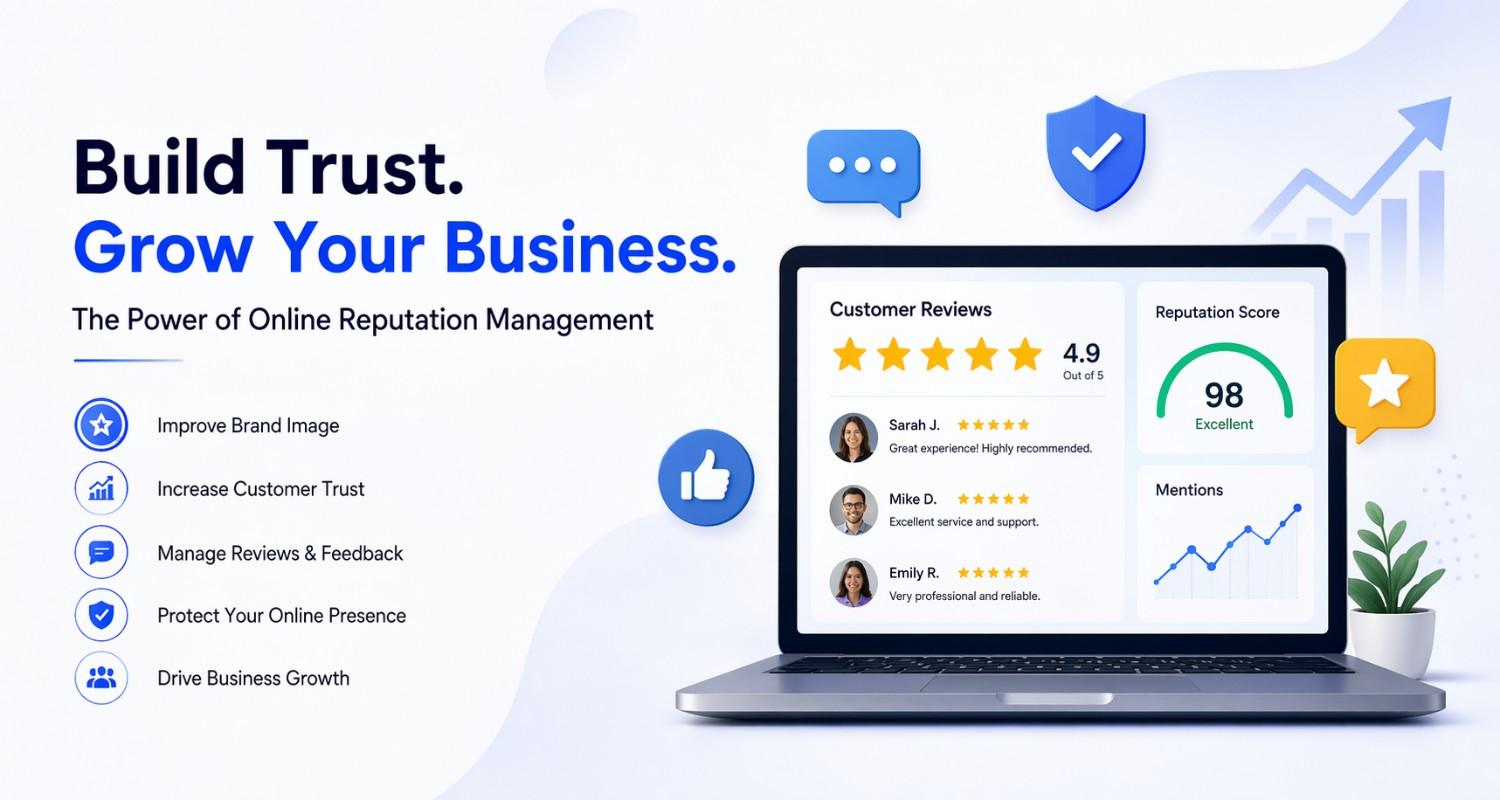
A potential customer searches your business on Google. Before visiting your website, before checking your pricing, and even before contacting you, they look at your reviews.
This is the reality of digital behaviour today.
According to BrightLocal, a significant percentage of consumers read online reviews before making a purchase decision. That means your reputation is no longer just perception; it’s a deciding factor in revenue.
This is exactly where online reputation management steps in. Not as a reactive fix, but as a proactive strategy to build trust, influence perception, and drive consistent growth.
What is Online Reputation Management (ORM)?
Online Reputation Management is the process of monitoring, influencing, and improving how your brand appears across digital platforms.
It includes:
Managing online reviews
Monitoring brand mentions
Responding to customer feedback
Promoting positive content
Addressing negative sentiment strategically
Unlike traditional branding, ORM operates in real-time. Every review, comment, or mention contributes to your digital identity.
Why Online Reputation Matters More Than Ever?
Trust has shifted from brand messaging to customer validation.
Today, people trust:
Reviews more than ads
User-generated content more than brand claims
Real experiences over marketing promises
Platforms like Trustpilot and Google Reviews have made transparency unavoidable. You cannot control what people say, but you can control how you respond and position your brand.
A strong online reputation directly impacts:
Purchase decisions
Conversion rates
Customer retention
Brand credibility
How Online Reputation Management Builds Trust?
1. Creates Strong First Impressions
When users search your brand, what they see shapes their perception instantly.
Positive reviews, consistent ratings, and active engagement signal reliability. On the other hand, unanswered complaints or negative feedback can push potential customers away.
ORM ensures that your brand’s first impression reflects professionalism and trust.
2. Strengthens Brand Credibility
Trust is built through consistency.
When customers see:
Regular positive reviews
Thoughtful responses
Active engagement
…it signals that your business values its customers.
This directly contributes to brand credibility, which is one of the strongest drivers of long-term growth.
3. Helps Manage Negative Reviews Strategically
Negative feedback is inevitable. Ignoring it is a mistake.
Effective reputation management focuses on:
Responding professionally
Offering solutions
Turning dissatisfaction into opportunity
This approach doesn’t just fix problems, it demonstrates accountability, which builds trust faster than perfection ever could.
4. Enhances Social Proof
Social proof is one of the most powerful psychological triggers in marketing.
When potential customers see others having positive experiences, they are more likely to trust your business.
ORM helps you:
Highlight positive customer experiences
Showcase testimonials
Build a strong narrative around your brand
How Online Reputation Management Drives Business Growth?
1. Improves Conversion Rates
A strong reputation reduces hesitation.
When customers trust your brand, they move faster through the decision-making process. This leads to:
Higher conversions
Lower bounce rates
Increased inquiries
2. Supports SEO Performance
Reputation and SEO are now interconnected.
Search engines consider:
Review signals
User engagement
Brand trust indicators
A well-managed reputation contributes to better visibility and stronger search presence.
3. Builds Customer Loyalty
Customers remember how you respond, not just what you sell.
By actively managing feedback and engaging with your audience, you create a relationship, not just a transaction.
This leads to:
Repeat business
Positive word-of-mouth
Stronger brand advocacy
4. Enables Better Crisis Management
Every brand faces challenges. What matters is how you handle them.
ORM allows you to:
Monitor brand mentions in real-time
Address issues before they escalate
Control the narrative during difficult situations
This minimizes damage and protects long-term credibility.
Key Strategies for Effective Online Reputation Management
1. Monitor Your Brand Presence
Track:
Reviews across platforms
Social media mentions
Search engine results
Tools like Google Alerts and brand monitoring platforms help maintain visibility.
2. Encourage Customer Feedback
Happy customers rarely leave reviews unless prompted.
Make it easy for them by:
Sending follow-up emails
Adding review links
Requesting feedback post-purchase
3. Respond to Every Review
Whether positive or negative, responses matter.
This shows:
You are active
You value feedback
You care about customer experience
4. Build Positive Content
Publishing high-quality content helps push down negative results and strengthens your brand narrative.
This includes:
Blog posts
Case studies
Customer success stories
5. Focus on Long-Term Trust Building
ORM is not a one-time fix.
It’s a continuous process that requires:
Consistency
Strategy
Ongoing engagement
Real-World Scenario
Imagine two businesses offering similar services.
Business A has mixed reviews, no responses, and inconsistent presence
Business B has strong ratings, active engagement, and visible customer satisfaction
Even if both offer similar quality, most customers will choose Business B.
That’s the power of reputation.
Final Thoughts
Online reputation is no longer optional, it’s foundational.
It influences how people perceive your brand, how they interact with your business, and ultimately, whether they choose you or your competitor.
When managed effectively, it doesn’t just protect your image, it actively contributes to growth.
If you’re investing in marketing but ignoring your reputation, you’re leaving conversions on the table.
Frequently Asked Questions
What is online reputation management and why is it important?
It is important because modern consumers rely heavily on online feedback before making decisions. According to BrightLocal, most users read reviews before trusting a business. This means your online image directly affects your ability to attract and convert customers.
A strong reputation builds credibility, while a poor one can silently drive potential customers away—even if your product or service is excellent.
How does online reputation management help build customer trust?
When customers see:
Positive reviews
Timely responses to feedback
Active engagement across platforms
…it reassures them that your business is reliable and customer-focused.
Online reputation management ensures that your brand consistently reflects these trust signals, helping potential customers feel confident in choosing you over competitors.
Can online reputation management improve SEO rankings?
Search engines consider several trust-based signals, including:
Review quantity and quality
User engagement
Brand mentions
Positive reviews and active reputation management improve click-through rates and user trust, which can influence rankings over time.
In simple terms: better reputation → higher trust → better engagement → improved visibility.
How should businesses handle negative reviews?
Instead, a strategic approach includes:
Responding quickly and professionally
Acknowledging the issue
Offering a solution or clarification
This shows accountability and builds trust with both the reviewer and future customers reading the interaction.
In many cases, a well-handled negative review can actually strengthen your brand perception.
How long does it take to improve an online reputation?
Depending on the current situation, it may take:
A few weeks for minor improvements
Several months for significant reputation repair
Consistency is key. Regular review management, content creation, and engagement gradually shift perception and improve overall brand sentiment.
Written by: